Bellatrix
Size 1Spay
A spay wound is small and usually heals without problems: what matters is that your dog or cat doesn’t lick, bite or scratch it during recovery. Here’s what to watch for and how to protect it without an Elizabethan collar.
 Reviewed by Eulalia Pérez, vet and surgeon, creator of MIMAR®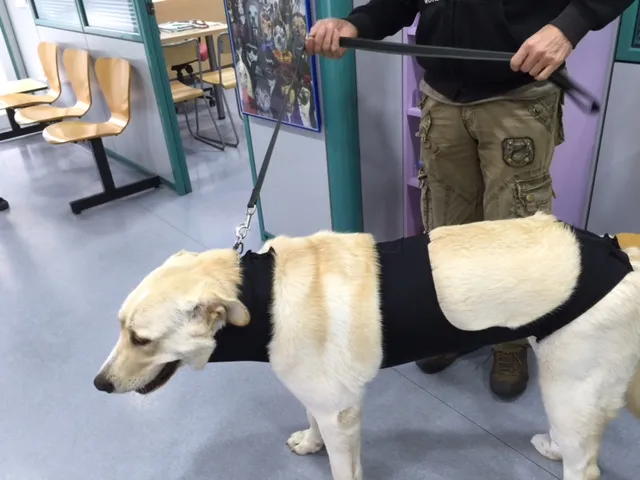
In most spays a small incision is made in the abdomen (laparotomy). It is a clean wound that heals in a few days, as long as it is well protected.
The problem arises when the animal licks, bites or scratches: the wound can become irritated, contaminated, infected or even open up. That prolongs recovery and means going back to the clinic.
The plate goes into the neck pocket and acts like a collar: it limits head turning so she can’t reach the wound or take the suit off.
When she’s supervised or out on a walk with you, you can remove it so she’s more comfortable.
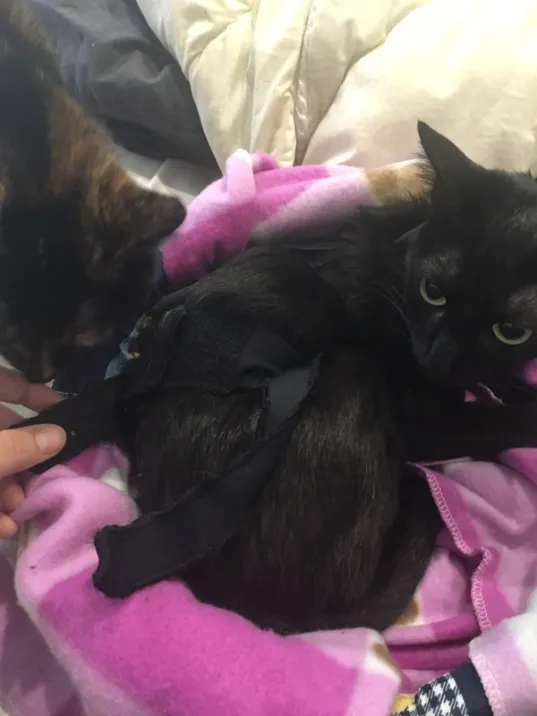
Most cats don’t need the rigid neck plate, which means greater wellbeing for your cat.
At first some cats freeze or walk strangely. It’s normal: put it on and take it off a few times and they get used to it quickly.
If in doubt, it’s best to ask: your vet knows how the surgery went and what to expect in your case.
Your vet decides, depending on the surgery and how the wound heals. After a spay it is usually around a week, until the check-up or the stitches are removed.
That’s why MIMAR® is available through the clinic: the vet assesses whether it is suitable, chooses the size and tells you how long to keep it on.
| During recovery after surgery | Elizabethan collar | MIMAR® Suit Recovery |
|---|---|---|
| Stops her licking or biting the wound | Yes | Yes |
| Stops her scratching it with her hind legs | No | Yes |
| Protects the wound from dirt, with antimicrobial fabric | No | Yes |
| Need for uncomfortable bandages | Yes | No |
| Eats, drinks and sleeps as normal | With difficulty | Yes |
| Goes for walks without bumping into doors or furniture | No | Yes |
For spaying, the long suit is used, which covers the chest and abdomen. The size is chosen by weight: see the size guide.
Seven dogs and one cat, ordered by size. In every case the suit was worn for 6 to 8 days, as advised by the clinic.

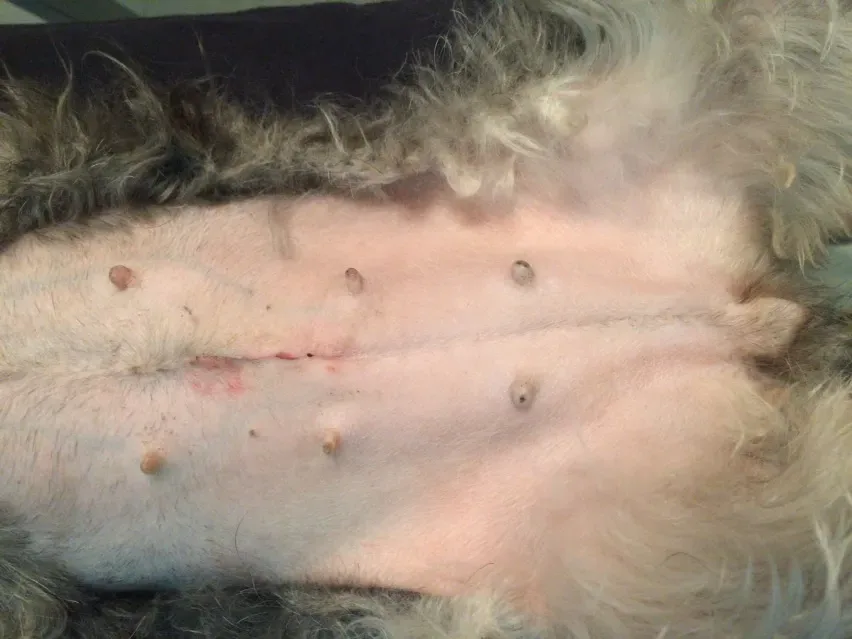 Miau’s wound during recovery with the suit.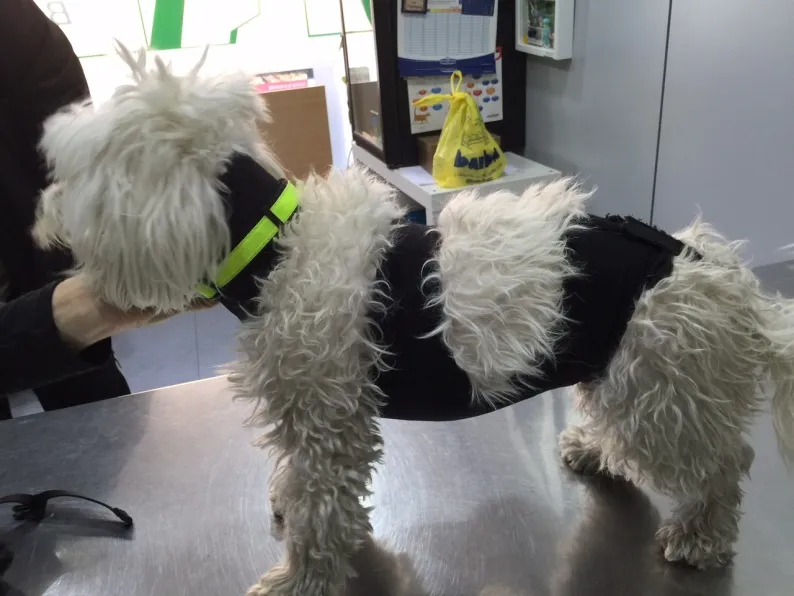
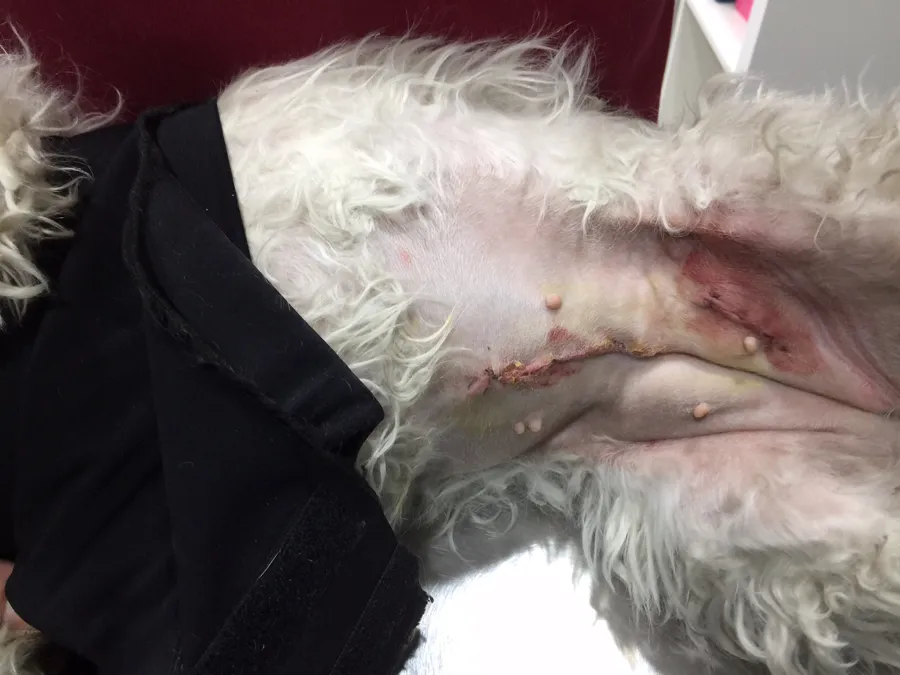 Lily’s wound during recovery with the suit.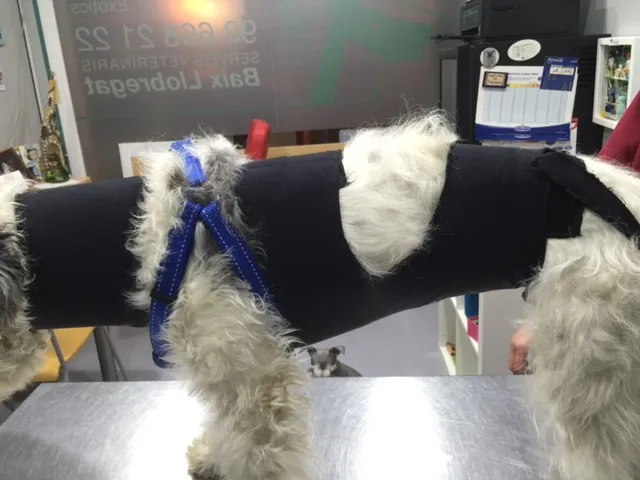
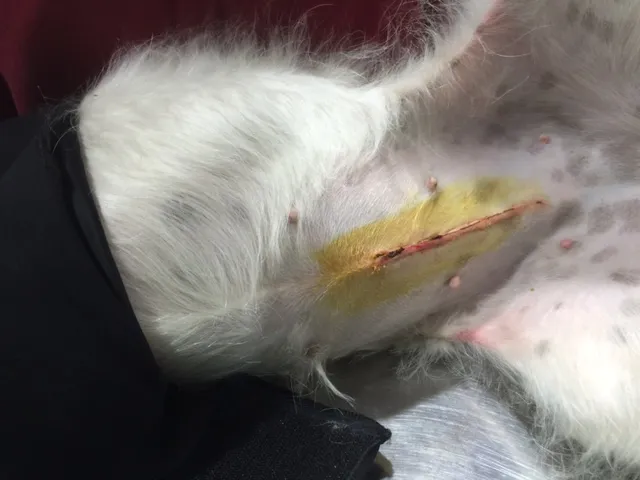 Blanqui’s wound during recovery with the suit.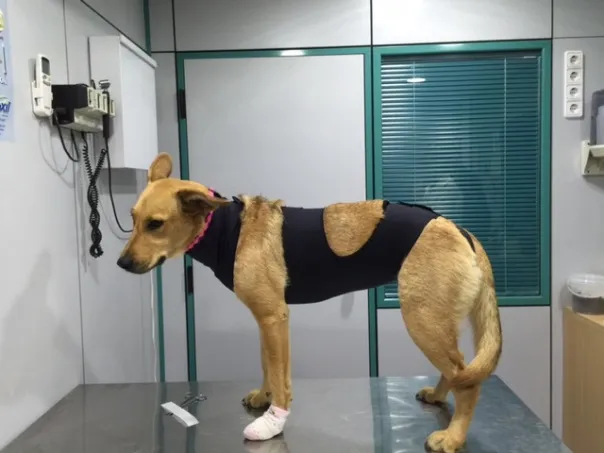
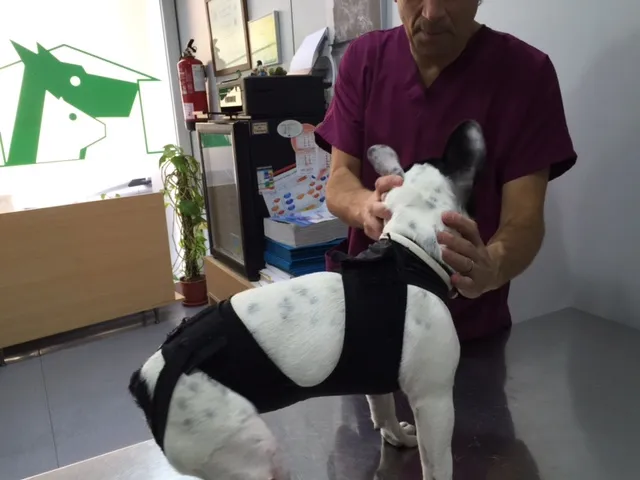
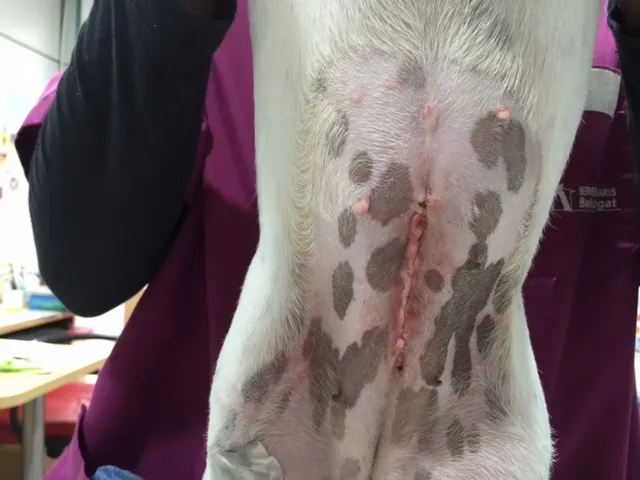 Perla’s wound during recovery with the suit.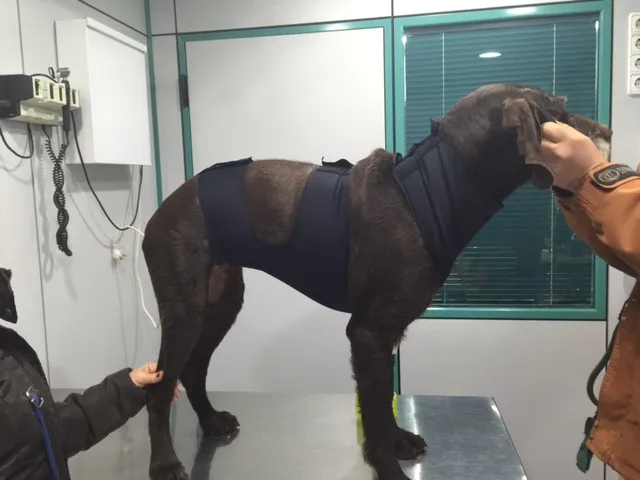
The wound photos are hidden: only open them if you want to see them.
Yes, throughout the recovery period, day and night, until your vet tells you it can come off.
Not always. When she’s supervised and when you take her out for a walk, you can remove it. Put it back in when she’s left alone or at night.
Yes, the suit does not interfere with any bodily function: she can eat, drink, urinate and defecate as normal.
It’s common at first. Put it on and take it off several times so she gets used to it; in most cases she’ll adapt quickly.
Yes. It is machine washable at 30 °C maximum and reusable, for example for another operation or for another animal of the same size.
If you’re getting your dog or cat spayed, mention it to your vet when you book the appointment. That way they’ll have the right size ready on the day of the operation and you’ll both leave the clinic without a cone.
This information is for guidance only and does not replace the judgement of your vet, who assesses each case.